
HFM information and reviews
HFM
96%
FXCC information and reviews
FXCC
92%
FxPro information and reviews
FxPro
89%
FBS information and reviews
FBS
88%
XM information and reviews
XM
86%
Exness information and reviews
Exness
86%

Understanding Lot Sizes: Balancing Risks and Rewards in Forex Trading


Stephane Dubois   Written by Stephane Dubois

The trading arena operates in a complex ecosystem that is constantly balancing between potential gains and inherent risks. At the core of this delicate equilibrium is the crucial concept of lot sizes. These standardized measurements greatly influence risk management in trading, especially in the volatile realm of forex. In this article, we will navigate the subtle nuances of lot sizes, exploring their definitions, their pivotal role, and their integration into effective risk management approaches.

Delving into Lot Sizes in Forex Trading

Lot sizes are standardized measurements integral to establishing uniform trade sizes within the forex market, a crucial adaptation due to the unique complexities of this financial sphere. In forex, the smallest possible movement a currency pair can experience is termed a ‘pip’. For instance, if the EUR/USD pair elevates from 1.1200 to 1.1210, it has moved by 10 pips.

In the forex domain, trading a single unit of a forex pair is not feasible or optimal, marking a divergence from stock trading norms. Hence, the forex market employs concepts like pips and lot sizes to establish uniformity and practicality.

The level of exposure you select is pivotal. A profound understanding of lot sizes and their intricacies can dramatically sway trading results. Many traders stumble due to inadequate knowledge in this area, with larger positions often resulting in more significant profits or losses. Drawing parallels to how products are priced, for example, confectionery manufacturers establish standard quantities instead of expecting customers to purchase individual items.

Various Lot Sizes in Forex

The chosen lot size affects the amount of currency traded, the potential profit or loss per pip movement, and the associated risk level. Larger lot sizes offer significant profits but come with elevated risks.

The Role of Lot Size Calculators

A lot size calculator is a quintessential tool for traders in the forex market to ascertain the suitable position size aligning with their risk parameters, account size, and market conditions, allowing for optimized risk management. It determines the appropriate position size in terms of lots, units, or contract sizes harmonizing with risk tolerance and trading strategy.
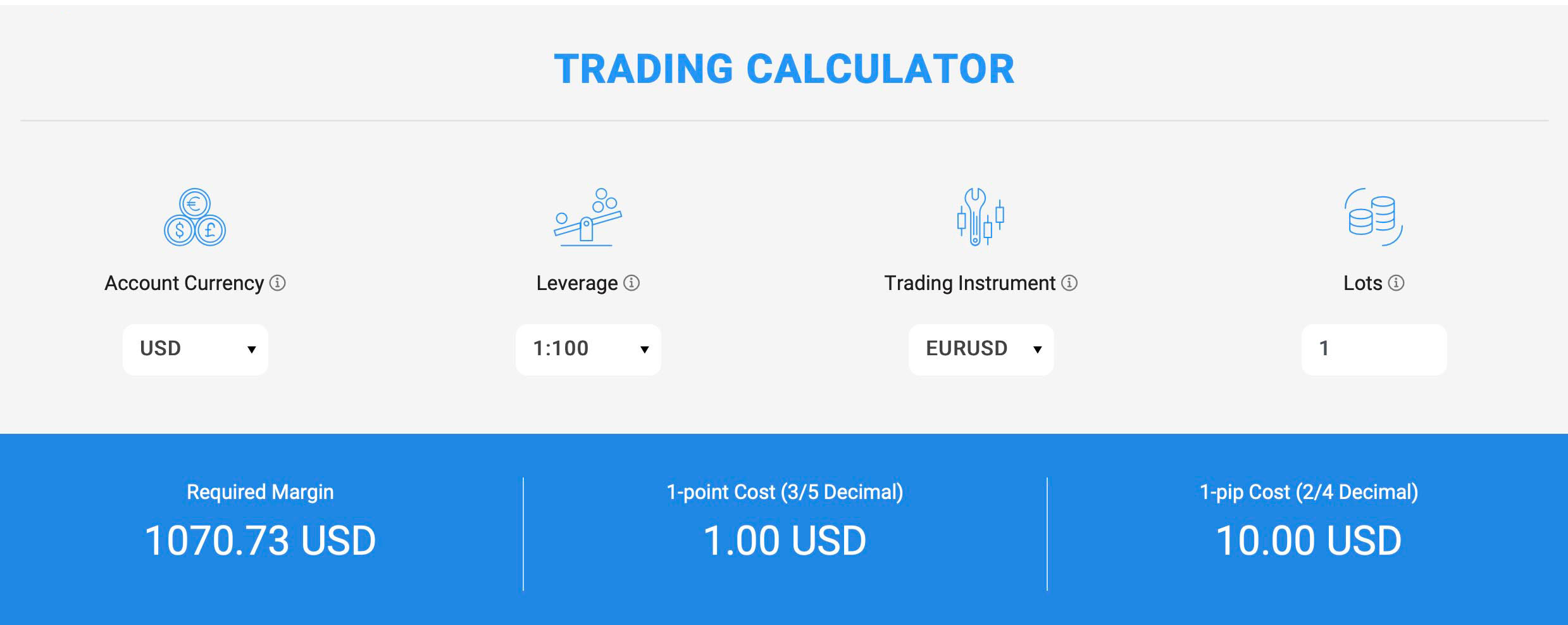
The Role of Lot Size Calculators

How It Operates:

Lot Sizes: The Pillar of Risk Management

Lot sizes are fundamental to managing exposure and potential losses in trading, especially in forex. They allow traders to maintain consistent risk across different trades, protect their trading capital, and ensure the longevity of their trading activities. They impact position sizing, risk per trade, consistency, account preservation, leverage management, adaptability, strategy tailoring, and psychological well-being.

However, lot sizes are merely one facet of a holistic risk management strategy. Aspects like setting Stop Loss levels, diversification, and maintaining a trading journal are of equal significance.

Conclusion

Prudent risk management is the foundation of enduring trading success. A deep comprehension of lot sizes and risk control, coupled with knowledge and precision, is paramount. Striking the right balance and integrating well-thought-out lot sizing can lead to consistent and sustainable achievements in the unpredictable world of trading. Embrace this understanding as your compass in the ever-evolving trading landscape.


RELATED

CFD trading made clear: an Octa guide

In keeping up with its clarity principle , the international broker Octa makes clear one aspect of trading at a time. Learn everything you need to know about CFD trading, simply and transparently...

Different Types of CFD Brokers

CFDs are financial derivatives that allow traders to speculate on the price of the underlying assets without having to physically own the asset. CFD brokers enable traders to buy or sell CFDs...

A Guide to Portfolio Diversification: Don’t Put All Your Eggs in One Basket

Most of us have heard of the saying "Don’t put all your eggs in one basket". In essence, this phrase warns us not to invest all our capital into a single trade, market, or product because we...

Why Is Inflation So High?

You may have noticed that the prices of your favorite products have recently increased quite a lot. The reason is the incredibly high rates of inflation impacting economies of countries all around the world...

What does soaring inflation mean for the markets?

The US CPI rose to a 40-year high of 7.5% in January as inflation keeps running hot despite economists expecting a print of 7.3%. This is the second time the index...

The Basics of Trading Psychology

Trading psychology is an often-overlooked aspect of trading, yet it can have significant impact on a trader’s performance. The term “psychology “refers to the mental and emotional state of a trader...

FBS: The Crucial Role of Time in Enhancing Trading Efficacy

In the intricate world of financial trading, numerous factors contribute to a trader's success. While indicators, market analysis, and portfolio management often take center stage, the element of time remains critically underappreciated...

What Is The Best Way To Invest Money When You Don't Have A Lot?

As we know, trading is impossible without starting capital as with 0 on the trading account, your profit will equal zero too. So, what can be done if a trader doesn’t have a sufficient amount to start investing...

Trading Psychology

Trading psychology is a key contributing factor to determining trading outcomes, as it can positively or negatively influence decision making...

How to Practice Discipline in Trading

The success of trading depends on many different factors. They include not only theoretical savvy, understanding of fundamental and technical analysis, constant learning...

Navigating Ethical Challenges in AI-Driven Trading: Bridging Wealth Inequalities

AI-driven trading has undoubtedly introduced numerous advantages for traders. Its ability to swiftly process vast data, formulate solutions, and execute trades within milliseconds...

Navigating the Nuances of Price Providers: An In-depth Analysis

In the intricate world of financial markets, the manner in which major institutions process ever-evolving market conditions is intricate and diverse...

Pegging in Crypto: Navigating Stability in the Digital Asset World

In the ever-evolving world of Cryptocurrencies, understanding the nuances of terms like “pegging” is crucial. Pegging in the realm of Crypto refers to anchoring the value of a digital asset to another asset or a basket of assets...

What Is Money Flow Index (MFI) In Forex Market Trading

One of the most important functions of financial markets, including the foreign exchange market, is the redistribution of money. Through the purchase/sale of stocks....

Risk Management Tools and Techniques

Trading on the FOREX market is exciting, but what makes it so exciting is what simultaneously makes it risky - volatility. Certain trading strategies...

How to forecast forex?

There are many articles telling about randomness and abruptness of forex. Some traders believe that it is impossible to predict anything in the market. Such authors try to persuade...

MT4 Features and Trading Advantages

MetaTrader 4 is a favourite platform for traders accessing a wide range of financial markets. As of 2021, more than 80% of brokers worldwide offered MT4 to their clients and the platform had an estimated user base...

How patience impacts your trading psychology

Trading psychology plays a major role in determining trading success. It refers to the emotions, behaviours, and various other aspects of a trader’s character that may impact their trading decisions...

What Is Margin Trading And How Does It Work?

Investors trading in the financial market commonly face issues with equity, which creates difficulties in conducting operations with currency pairs and other assets. This lack of equity is primarily due...

The Reasons Why 90% of Crypto Traders Lose Money

Even though trading as a whole, and cryptocurrency trading, in particular, is a potentially vastly profitable endeavor where one can make as much money in a month...

FP Markets information and reviews
FP Markets
81%
IronFX information and reviews
IronFX
77%
AMarkets information and reviews
AMarkets
76%
Just2Trade information and reviews
Just2Trade
76%
FXNovus information and reviews
FXNovus
75%
T4Trade information and reviews
T4Trade
75%

© 2006-2025 Forex-Ratings.com

The usage of this website constitutes acceptance of the following legal information.
Any contracts of financial instruments offered to conclude bear high risks and may result in the full loss of the deposited funds. Prior to making transactions one should get acquainted with the risks to which they relate. All the information featured on the website (reviews, brokers' news, comments, analysis, quotes, forecasts or other information materials provided by Forex Ratings, as well as information provided by the partners), including graphical information about the forex companies, brokers and dealing desks, is intended solely for informational purposes, is not a means of advertising them, and doesn't imply direct instructions for investing. Forex Ratings shall not be liable for any loss, including unlimited loss of funds, which may arise directly or indirectly from the usage of this information. The editorial staff of the website does not bear any responsibility whatsoever for the content of the comments or reviews made by the site users about the forex companies. The entire responsibility for the contents rests with the commentators. Reprint of the materials is available only with the permission of the editorial staff.
We use cookies to improve your experience and to make your stay with us more comfortable. By using Forex-Ratings.com website you agree to the cookies policy.