HFM information and reviews
HFM
96%
FxPro information and reviews
FxPro
89%
FXCC information and reviews
FXCC
86%
XM information and reviews
XM
81%
IronFX information and reviews
IronFX
77%
Just2Trade information and reviews
Just2Trade
76%

What are defensive stocks and why you should consider them?


The market has fallen sharply this year, and investors have seen losses. Question: Can defensive stocks help hedge against risks? What are their advantages? Should I consider buying them? If yes, should I immediately fill my entire portfolio with defensive stocks? Defensive stocks help protect the portfolio from heavy drawdowns. They fall into the category of save-haven assets together with certain currencies and gold.

What are defensive stocks?

In unstable times, investors are in no hurry to part with defensive stocks. Such securities sink less, and some could grow even in a bear market. But there is also a downside. When the economy is developing, the growth potential is much lower. Defensive stocks are securities of stable companies that make a profit regardless of the state of the economy or overall stock market.

As a rule, this is a business related to essential goods and services, which are always in demand. For example, if a person struggles financially, they may give up on their vacation or a new car, but they won’t probably cut down on medical expenses, food, or electricity.

One can’t name particular features to define a defensive stock. There could be many criteria. But, there are some shared features — a huge market cap, regular dividends, and stable fundamentals. Defense companies have stable profits and dividends. Usually, these are companies related to utilities, medicine, and essential goods. Their financial flows do not depend much on the economy. There is a constant demand for their products.
What are defensive stocks and why you should consider them?

Which assets best protect a portfolio from a market crash?

Defensive stocks are less volatile than the general market and fall less during a crisis. On the other hand, low volatility also means low upside potential. Therefore, defensive stocks underperform in a rising market. And if you build a portfolio of defensive stocks only, it will be a more conservative strategy and low profits.

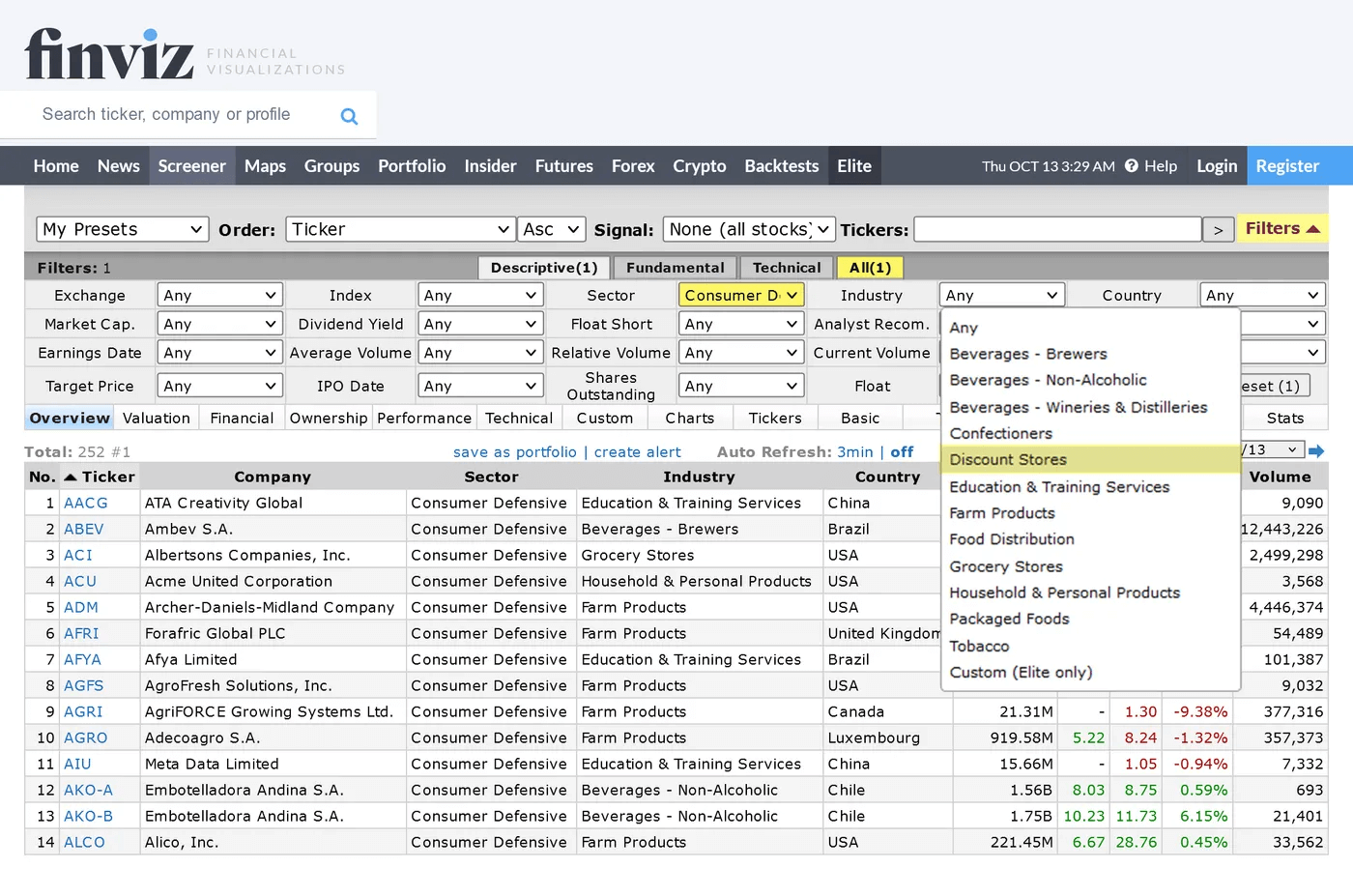
You can use screeners to sort stocks and find defensive ones. In the Finviz screener, for example, you can sort companies by sector and industry. For example, you can select discount stores:

Enjoy trading and earning money on a day-to-day basis!

Open a trading account and trade currency pairs, crypto, stocks, indices, etc. If you’re engaged in day trading, long-term trends don’t influence your trades. You don’t need long-term forecasting and long-term strategies. This goes for currency, stocks, and other assets!

#source


RELATED

Money Management: One of the Keys to Success

Online trading of currencies (Forex), cryptocurrencies, and CFD deals with other financial assets (stocks, gold, oil, etc.) offer unique opportunities...

Volatility: What It Is and Why You Should Know About It

Everyone who has ever dealt with trading has come across such a thing as volatility. It is easy to guess that this concept is important, since it is talked about, discussed in textbooks and various articles...

Understanding CFD Trading in Forex and Other Markets

Contracts for Differences (CFDs) stand out as intriguing financial instruments, offering traders the ability to capitalize on price fluctuations without actually owning the underlying assets...

Forex Copy Trading: A Complete Guide

Copy trading is an increasingly popular trading strategy among forex traders. Like its name suggests, copy trading involves copying or following the trades made by other traders...

Real Forex Trading: Find Out What All the Fuss is About

The market for trading forex or foreign currencies is known as foreign exchange trading, or forex trading or FX. The largest market in the world, forex, and what happens in it, influence real, everyday life...

What is Spread, and Are You Better Without It?

Spread is a central element in Forex trading. Traders are keen to know and ask a lot of questions about it. While spread exists in various sectors of the financial market...

Investing In Artificial Intelligence (AI): A Beginner’s Guide

Investing in artificial intelligence (AI) has become an increasingly popular choice for investors as the technology continues to reshape industries and drive innovation...

Why trade shares?

Why trade shares, continue to read and learn more. Trading shares involves buying and selling company shares listed on a stock exchange. Traders choose to trade shares...

Unlocking the Power of Fibonacci Retracement: A Beginner's Guide

Trading with Fibonacci retracement might sound daunting, but it's a remarkably valuable tool once you grasp its fundamentals. Let's delve into the key concepts and step-by-step guidance...

Seven Tips for Trading Gold Forex (XAU/USD)

Trading gold forex (XAU/USD) has become more popular as forex, silver traders or metal traders look for positions that have the potential to go against inflation or market volatility...

How to Scale up a Small Trading Account in Forex?

Many aspiring Forex traders have one really important question: how to scale up a small trading account in Forex more successfully? This is an important question...

Foundations of Financial Trading: A Comprehensive Introduction

Welcome to the fascinating world of financial trading, an arena where the exchange of financial assets between buyers and sellers shapes the global economy...

Popular trading myths you need to stop believing

If you are a newbie trader and you want to learn the truth about trading, one of the first things you need to have is an accurate understanding of what trading...

What are silver investments?

Silver investments are precious metals assets characterized by their availability and their potential to expand and diversify the investor's portfolio. There are many options...

How to be a value investor

Value investing is an investment strategy that focuses on stocks that are underappreciated by investors and the market at large. The stocks that value investors seek typically look cheap compared...

The Past, Present and Future of Trading Success

Let's have a look at some basic needs to find out our story. Let your mind go back to the past, remember that first day when you decided to make your first trade...

Is Riverquode good for forex trading? What every trader should know

Finding the right forex broker is one of the most important decisions a trader can make. With hundreds of platforms competing for attention, it is essential to understand which ones offer real value, strong regulation, and dependable trading conditions.

A Guide to Understanding Inflation and How It Affects Traders

Inflation is becoming an increasingly important factor in our everyday lives. Google searches are up, and it has reasserted itself as a topic of popular conversation. Traders are having to familiarise...

Best Currency Pairs to Trade for Beginners

Forex is a financial market where currencies are bought and sold to make a profit. Trading in the Forex market is done in pairs, each consisting of two currencies...

Dollar-Cost Averaging: The Strategic Method to Strengthen Your Portfolio

Imagine the routine process of fueling your car. If you consistently refuel your tank every week, you'll average out the cost when gas prices rise and fall throughout the year...

T4Trade information and reviews
T4Trade
75%
Riverquode information and reviews
Riverquode
75%
FXCess information and reviews
FXCess
75%
Fintana information and reviews
Fintana
74%
AMarkets information and reviews
AMarkets
60%
Exness information and reviews
Exness
60%

© 2006-2026 Forex-Ratings.com

The usage of this website constitutes acceptance of the following legal information.
Any contracts of financial instruments offered to conclude bear high risks and may result in the full loss of the deposited funds. Prior to making transactions one should get acquainted with the risks to which they relate. All the information featured on the website (reviews, brokers' news, comments, analysis, quotes, forecasts or other information materials provided by Forex Ratings, as well as information provided by the partners), including graphical information about the forex companies, brokers and dealing desks, is intended solely for informational purposes, is not a means of advertising them, and doesn't imply direct instructions for investing. Forex Ratings shall not be liable for any loss, including unlimited loss of funds, which may arise directly or indirectly from the usage of this information. The editorial staff of the website does not bear any responsibility whatsoever for the content of the comments or reviews made by the site users about the forex companies. The entire responsibility for the contents rests with the commentators. Reprint of the materials is available only with the permission of the editorial staff.
We use cookies to improve your experience and to make your stay with us more comfortable. By using Forex-Ratings.com website you agree to the cookies policy.