FxPro information and reviews
FxPro
89%
XM information and reviews
XM
81%
Octa information and reviews
Octa
79%
IronFX information and reviews
IronFX
77%
Just2Trade information and reviews
Just2Trade
76%
T4Trade information and reviews
T4Trade
75%

3 Tips on How to Take Advantage of Volatile Markets


What’s your first reaction when market prices suddenly go tumbling down or climb up? Do you start to worry or do you calmly think it through and act based on your trading strategy? In any case, as a trader, you’ve probably experienced market volatility in a number of situations. Online trading comes with the uncertainty of price fluctuations and this is what keeps traders on the edge of their seats.

If you’re wondering whether there are any ways to help you feel more confident and reassured in times of high volatility, keep reading below!

 What is Volatility?

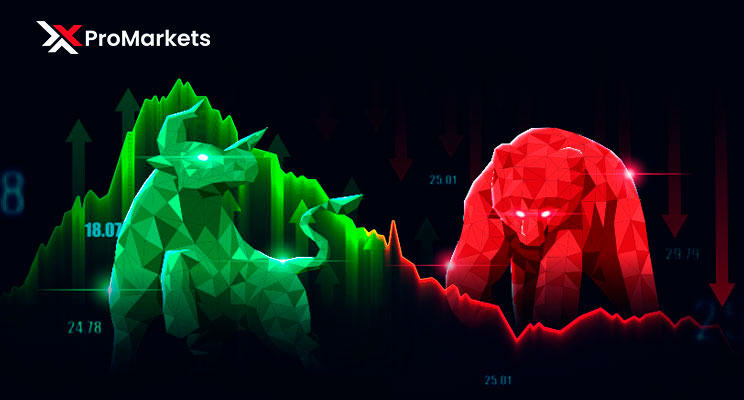
In a short period of time, volatility measures the tendency of a market or security to rise or fall sharply. Typically, it is defined as the standard deviation of an investment's return over a specified time period. Investing in different types of assets will have different volatility depending on how much and how often their prices or returns move over time. Price fluctuations and heavy trading are common characteristics of volatile markets. This happens when there is an imbalance in trade orders in one direction. The volatility of the market usually rises when investors are fearful or uncertain. Economic downturns, geopolitical events or natural disasters can cause this kind of downturn. In 2008-09, for instance, the credit crisis contributed to higher market volatility. In addition, the market volatility spiked in 2022.
3 Tips on How to Take Advantage of Volatile Markets

What Can You Do?

Risk Management

Traders should always be aware of the risk entailed in online trading. Just as huge profits may arise, unexpected losses are also part of CFD trading. However, this does not mean that you should just sit back and remain inactive when things go sideways. Risk management is all about carefully considering your trading positions, your entries and exit points, and the funds you are willing to risk. Especially in volatile markets, risk management can prove to be one of the most fundamental strategies for every trader. In this way, even if any unexpected price changes occur, you will have already prepared your exit strategy and your next move.

Remember your Ultimate Trading Plan

When you first created a trading account, you probably had a specific goal in mind that you wanted to achieve in a certain period of time. This is the ultimate trading plan that guides you throughout your trading journey and keeps you disciplined when challenges arise. As your trading positions could be affected by a variety of factors, such as global economic events, it’s important to think back to your trading plan. This can help you look at the situation more clearly and then help you decide your next move more effectively. What’s also essential to remember is that your trading plan will keep you motivated as every day you will want to be one step closer to making your trading goals a reality.

Stay Ahead of the Markets

How can you stay one step ahead of the ever-changing financial markets? By practising and educating yourself on a daily basis. If you truly want to become the trader you aspire to be, you need to put all your efforts into boosting your trading skills and knowledge. In this way, you will be better prepared to handle any challenge that comes your way. It is also essential that traders stay on top of every economic event that could impact their trading positions, as fundamental analysis is vital when it comes to analyzing and understanding price movements.

Are you ready to face the markets? Log in to your XPro Markets account and discover all the tools and resources you need to conquer the volatile markets and discover some of the most trending CFDs out there! 

Risk Warning: Contracts for Difference (‘CFDs’) are complex financial products, with speculative character, the trading of which involves significant risks of loss of capital. 
Disclaimer: This material is considered a marketing communication and does not contain, and should not be construed as containing investing advice or a recommendation, or an offer of or solicitation for any transactions in financial instruments or a guarantee or a prediction of future performance. Past performance is not a guarantee of or prediction of future performance.

#source


RELATED

What is an Index Fund? A Definitive Guide

When faced with volatility in the financial markets, your first defence against the inevitable is having a well-balanced and diversified portfolio. Diversification of your portfolio can be done in many ways...

WETH vs. ETH: What’s the Difference?

Ethereum (ETH) and Wrapped Ethereum (WETH) are two digital assets that have become increasingly popular in the world of decentralized finance (DeFi). While both assets share many similarities...

Mastering the Art of Forex Profit Calculation

Forex trading, a venture both intricate and potentially rewarding, hinges on the precise understanding of profits and losses (P&L). As each trade unfolds, the fluctuating forex market presents a myriad of risks...

Why Live and Demo Forex Trading Show Differences

In practice - often because of the lack of a real money commitment - results achieved from trading in a demo account...

Choosing a Trading Instrument: How to Trade Indices

By now, you must be familiar with the names of the world's major stock indices: Dow Jones, S&P 500, NASDAQ, DAX30... But did you know that they can...

How to Create NFT Art?

NFT stands for non-fungible token. This is a unique token on a blockchain that cannot be replaced with something else. For example, Bitcoin is fungible...

What are Interest Rates and How to Calculate Them?

Every country around the world strives to create the best economic conditions and provide financial security to their citizens. However, the unpredictable nature of the global...

Nasdaq CFD Trading: Everything You Need To know

The Nasdaq composite index is one of the three most important and popular major stock indices traded on the United States stock market. These three crucial indices...

Unlocking the Potential of Asset-Backed Cryptocurrencies: An In-Depth Exploration

Imagine blending age-old investment wisdom with the groundbreaking digital currency sphere. The infusion of the US dollar into blockchain technology, or endowing cryptocurrencies...

Cardano vs. Solana: Which one is the Better Investment?

Cardano and Solana have captured the imagination of crypto enthusiasts in the last few years, rising with the previous bullish run of crypto. The two cryptocurrencies...

What Is a Limit Order? How Does It Work?

One way that you can protect your account is by using what is referred to as a "limit order". These orders specify the most you are willing to buy or sell a security at

When is the best time to buy Bitcoin?

Should you buy Bitcoin at $20k or wait for an even bigger drop? There are many arguments in favor of not postponing the purchase of the flagship crypto...

How to Invest in Apple with Libertex

Regardless of which side you fall on in the great Apple vs Android debate, the impact Apple has had on the world of technology cannot be denied. Nor can its high performance...

Best Cryptocurrency to Invest in During 2020

While Bitcoin is still very much the most well known, and most widely regarded cryptocurrency around, it is only one in a list of near thousands...

What is the Bitcoin Fear and Greed Index?

As a cryptocurrency trader, you will eventually encounter the “Crypto Fear and Greed Index.” This article explores this valuable tool, provides insights on how to utilize it, and outlines its significance...

How to Assess PAMM Account

PAMM Account Monitoring Service provides an extensive overview of tools for analyzing the work of managers. In general, all monitoring...

Wrapped Bitcoin and relationship with Ethereum explained

The cryptocurrency industry and both the Bitcoin and Ethereum ecosystems are rapidly evolving, and have come to the point of converging together as Wrapped Bitcoin (WBTC)...

Tips to Help You Trade Indexes CFDs like a Pro

Investors are taking advantage of every trading opportunity in the financial markets to increase their financial power. One of the several investment opportunities...

How to Trade Commodities Online with the Best CFDs Broker

Trading commodities online is very popular among traders. With the option to trade commodities on the futures market or through derivatives such as Contracts for Difference (CFDs)...

Navigating the Complex Terrain of the Forex Trading Environment: A Strategic Guide for SMEs

In today's increasingly interconnected global economy, Indian Small and Medium Enterprises (SMEs) are no longer confined by domestic borders. Whether you're importing raw materials, exporting finished goods, or even just paying for overseas software services, your business is inevitably interacting with the vast and dynamic world of foreign exchange.

Riverquode information and reviews
Riverquode
75%
FXCC information and reviews
FXCC
75%
FXCess information and reviews
FXCess
75%
Fintana information and reviews
Fintana
74%
AMarkets information and reviews
AMarkets
0%

© 2006-2026 Forex-Ratings.com

The usage of this website constitutes acceptance of the following legal information.
Any contracts of financial instruments offered to conclude bear high risks and may result in the full loss of the deposited funds. Prior to making transactions one should get acquainted with the risks to which they relate. All the information featured on the website (reviews, brokers' news, comments, analysis, quotes, forecasts or other information materials provided by Forex Ratings, as well as information provided by the partners), including graphical information about the forex companies, brokers and dealing desks, is intended solely for informational purposes, is not a means of advertising them, and doesn't imply direct instructions for investing. Forex Ratings shall not be liable for any loss, including unlimited loss of funds, which may arise directly or indirectly from the usage of this information. The editorial staff of the website does not bear any responsibility whatsoever for the content of the comments or reviews made by the site users about the forex companies. The entire responsibility for the contents rests with the commentators. Reprint of the materials is available only with the permission of the editorial staff.
We use cookies to improve your experience and to make your stay with us more comfortable. By using Forex-Ratings.com website you agree to the cookies policy.